

Pinball Wizard
How Michael Whelan discovered himself in a California arcade


Ever since I was a young boy, I’ve played the silver ball… - The Who
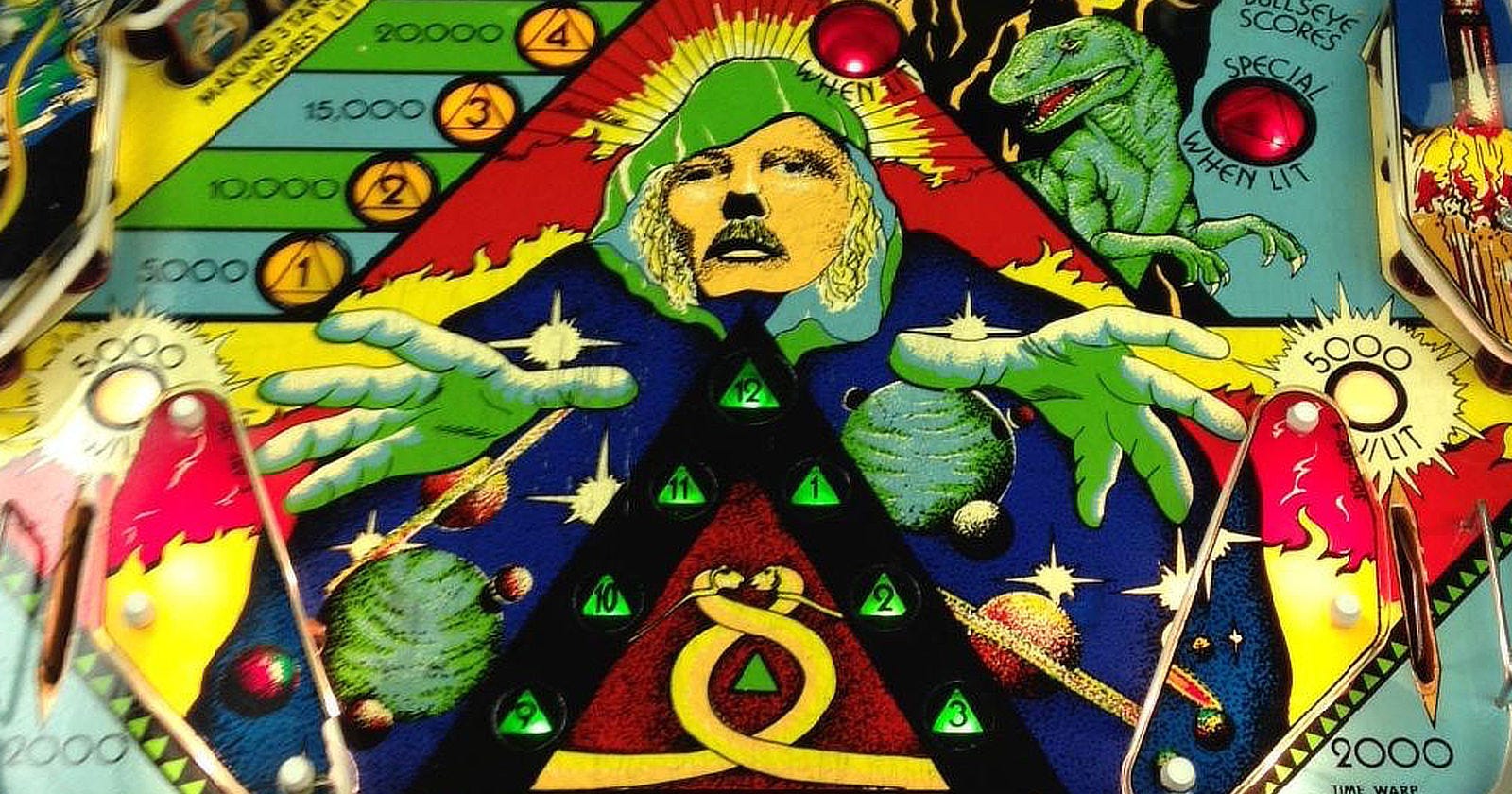
In 1980, Audrey and I returned to my home state for a vacation in Monterey, CA. We were enjoying ice cream together while out on a stroll when we dropped into the arcade next door. That’s where we discovered a most unusual pinball game.
I’ve run into unauthorized bootlegs of my art on occasion, and while it’s disappointing to see anything printed without my permission, it’s hardly a surprise. But what I found in the arcade that day was different. The pinball machine didn’t crib my work; it stole my face. It absolutely blew my mind to see me staring out from under that glass.
It isn’t everyday you find likeness painted on a commercial product. There’s no preparing for the shock of a revelation like that. It hit like the ping-ping-ping of a ball rebounding bumper-to-bumper, dropping targets with electronic chirps and flashes of neon LEDs as the point total climbs to an all-time high score.
Lets Do the Time Warp Again
In the years that followed, my curiosity over the game only grew. I began to question whether the universe had really bestowed pinball wizardry on me? Or if it was all the product of ego and imagination?
Growing up, I remember going to bus stops in California with my cousin Kerry and spending stacks of quarters on pinball. They were often in the seedier parts of town, so it felt like an adventure to us as kids. Whatever town I ended up in, it seemed like I could reliably find at least one pinball machine there.
Ultimately, those odds proved true when by chance my sister saw the same exact design on a game in a bar in Ketchikan, AK. When she recognized me in the artwork, it confirmed that I wasn’t hallucinating the whole experience. It really was me…but why? And how many of those machines existed out there?
It wasn’t until four decades later that I managed to track down more information. The problem was that I’d misremembered the name as “The Wizard”—probably the result of too many turns of Tommy by The Who.
A Wizard by Any Other Name
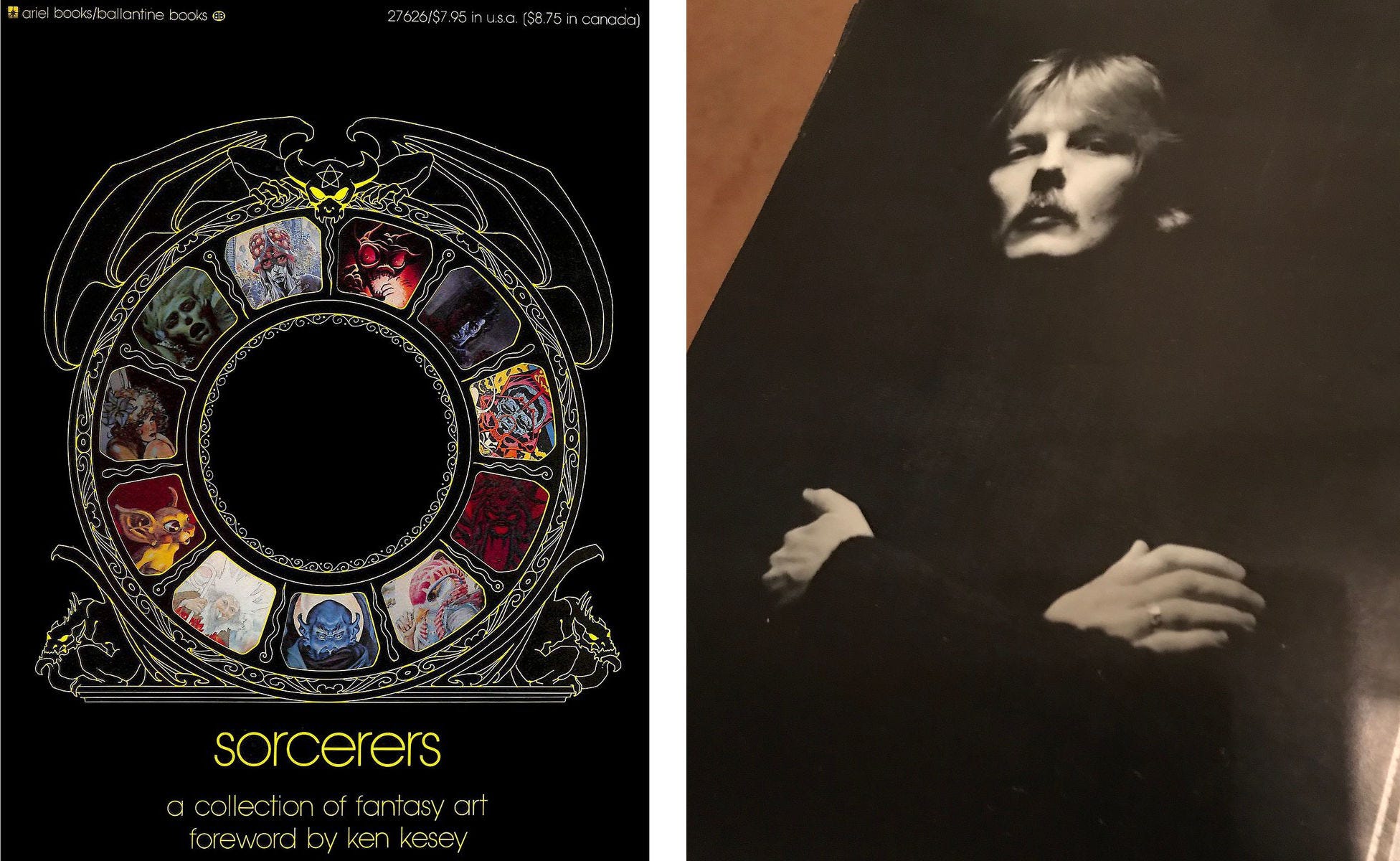
My initial suspicion was that someone on the design team had picked up a copy of Sorcerers. Published in 1978, that art book enjoyed wide distribution through Ballantine, and it featured several of my paintings alongside a posed picture of me.
Likely long forgotten by now, Sorcerers was a hot title then, which included other notable artists, including Steve Hickman, Jack Kirby, Jim Steranko, and others. I was certain the designers took inspiration from what they found in those pages.
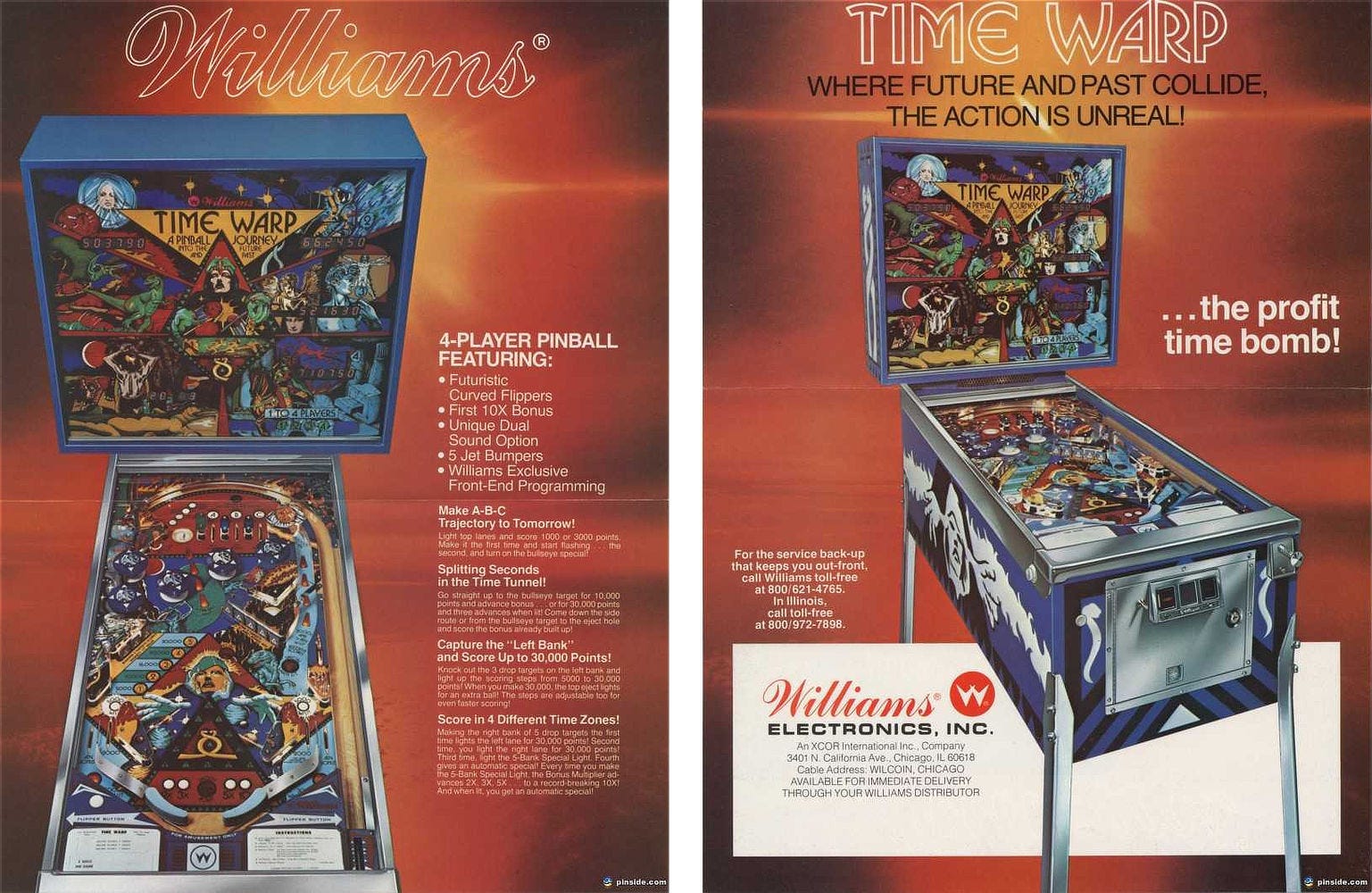
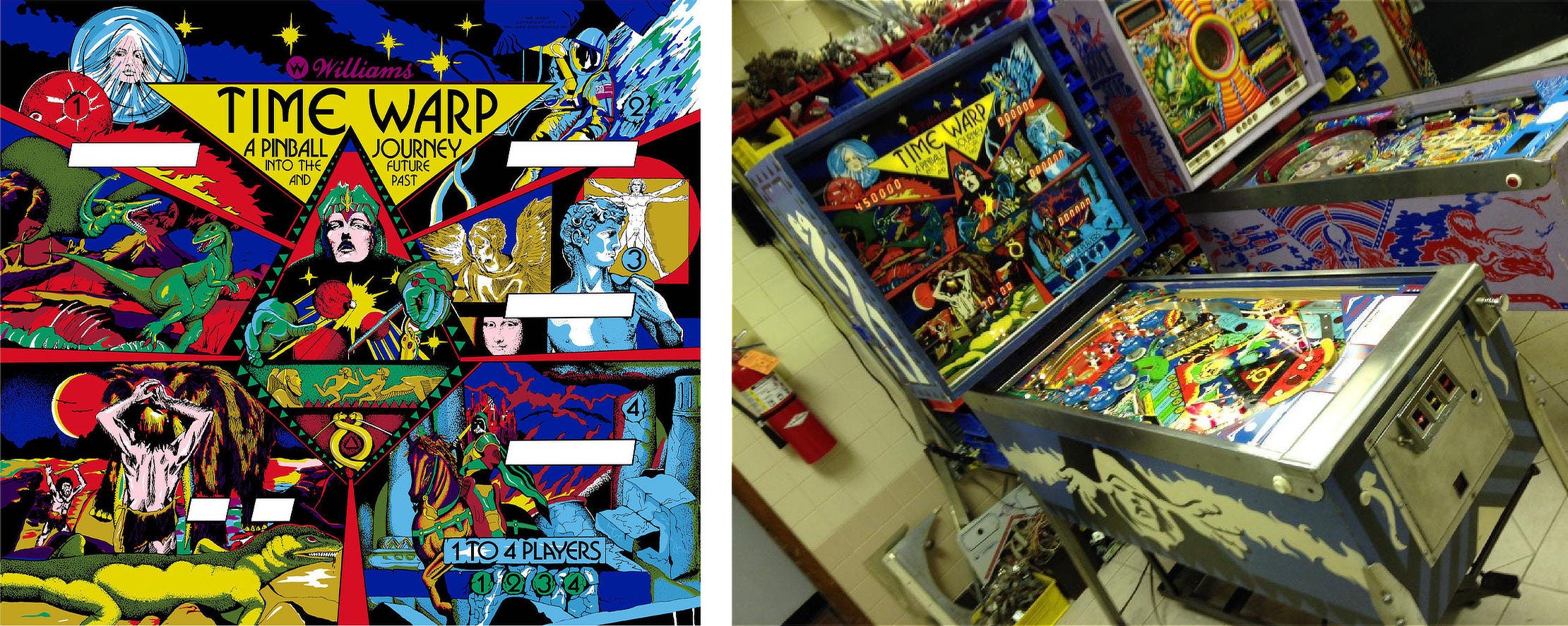
Once I recalled the name correctly, I was able to track down more information about “Time Warp.” It was the one of 35 pinball machines designed by Barry Oursler, a legend in the field who sold 135K units for Williams’ Electronics from 1978 and 1996.
This table was unique though, only one of two models to feature the novelty of banana paddles. The curved shape made it easier to cradle and trap the ball. This machine was only the second designed by Oursler, and it powered its way to sales of 8,800 units.
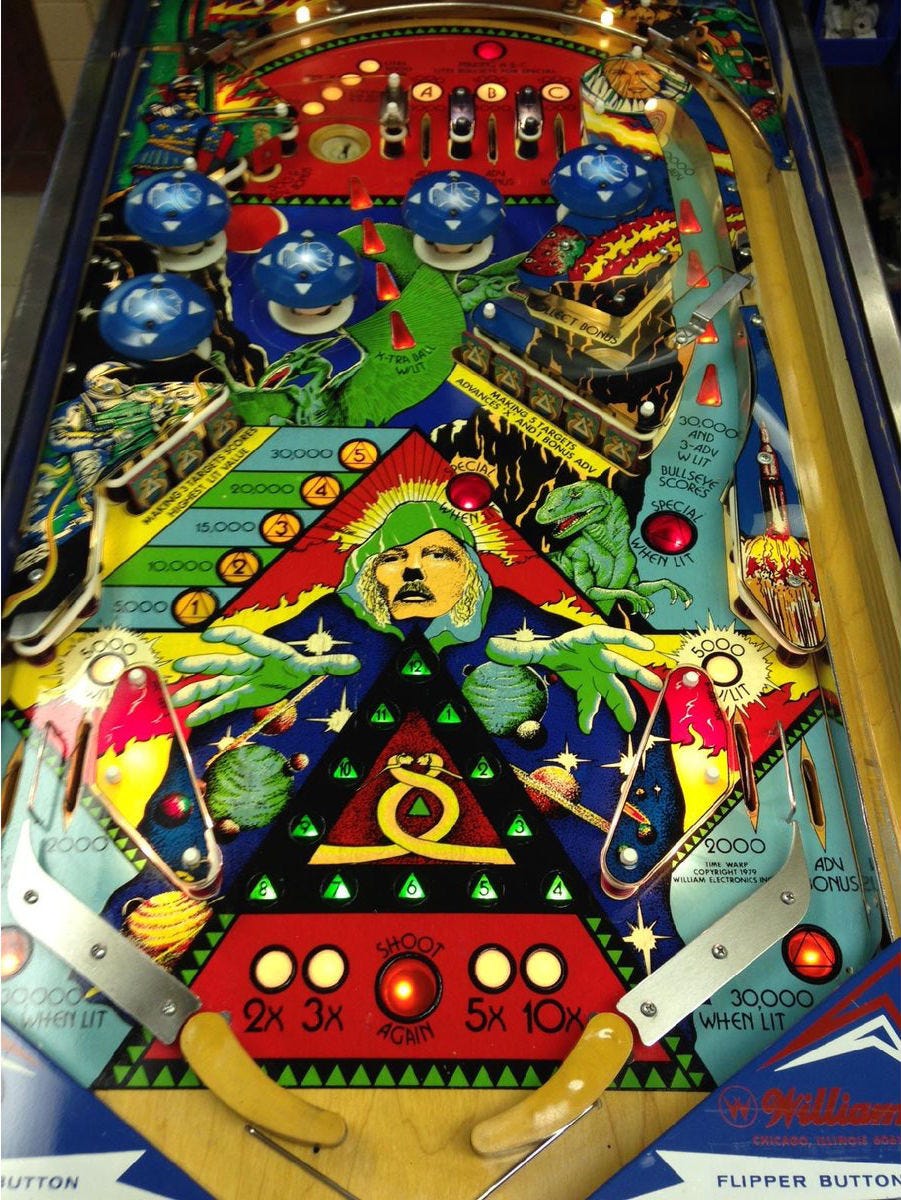
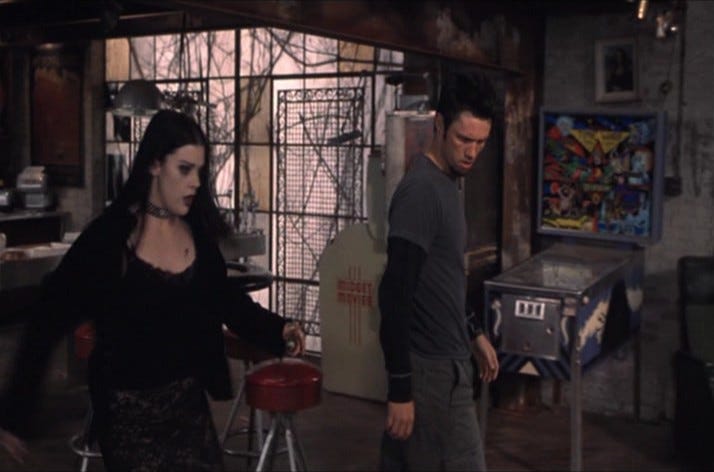
As it turned out, Time Warp became a famous table—it even has a Wikipedia page! Interestingly, it made multiple appearances on the big screen, including in Book of Shadows: Blair Witch 2 and an Italian film titled “Troppo Forte,” which featured a passion for pinball that you have to see to believe.
Unfortunately, Barry Oursler passed away from cancer in 2022, so I never had a chance to ask about the inspiration for the game’s “Time Wizard.” In an interview, Oursler talked about being a fan of comic books and science fiction, which lends credibility to my Sorcerers theory.
Art for Time Warp was credited to Constantino Mitchell and Jeanine Mitchell, so it’s possible there’s an answer to this personal mystery out there…at least I can hope!
Michael Whelan
If you’d like to learn more about Time Warp and see a walkthrough of game action, we found a video that brings this pinball classic to life.
Weekly Art Recap


Niobe - cover for Incarnations of Immorality book 3 by Piers Anthony
Moon’s Window - inspired by the ruined architecture of Whitby Abbey
Footsteps - pondering an uncertain future in the age of climate collapse
Leavetaking - a large planned study that became a finished Passage painting
19 O’Clock - revisiting the symbol I created for The Dark Tower by Stephen King
Rhea the Witch - inspired by a plastic glove for the 2019 L&PG gallery
Like what you see? Subscribe!
If you like in-depth content about Michael Whelan’s art including deep dives into his process, please consider subscribing. Our weekly newsletters are free, and we offer additional perks for paid supporters like previews of original art before it hits our shop and high resolution digital wallpapers and the digital edition of Wonderworks!
I love pinball. That's awesome.
Whitby Abbey! I went to Whitby in 1973 because that's where Dracula made landfall in England! Then there were no trains out. No hotels, no B&Bs, hostel was full. We sat up on the hill where the abbey was and eventually boarded a sailboat up the coast of Yorkshire, which is a whole other story...but I LOVE that Abbey. And of course Stoker would have had Dracula make landfall in Whitby: where all the jet for Victorian Mourning jewelry was mined!