

Scenes and Visions
In Conversation with Terry Booth



As we turn the page to a new year, I wanted to revisit an interview with Terry Booth published with The Art of Michael Whelan in 1993. The excerpt below offers a primer on how Michael came to view his art as desire to pursue his own personal visions changed the course of his career.
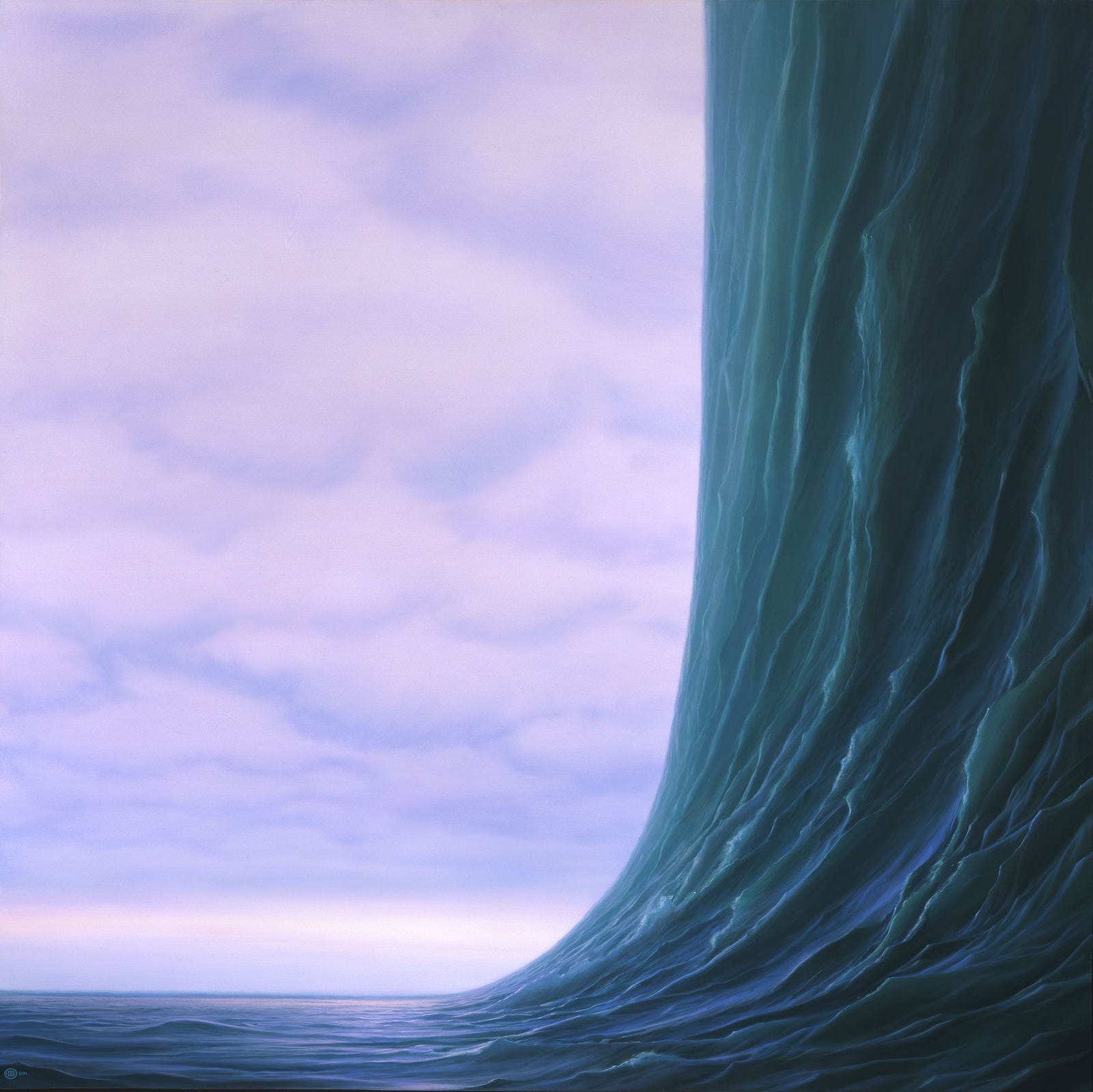
Back then, these thoughts on his oeuvre largely shaped the organization of that seminal art book, dividing it into two sections: Scenes and Visions. The interview struck me as relevant because of a recent conversation that spun out of “Magical Waters”, an in-depth feature on the painting SEAWALL.
In response to that article, Michael started talking about where lines blur in his work. Categorizing sometimes isn’t as simple as labeling a painting illustration or fine art. I look forward to exploring the complexity of this in the new year. Today, I’ll let Terry and Michael set the stage for that larger conversation.
Michael Everett
The dream is the small hidden door in the deepest and most intimate sanctum of the soul, which opens into the primeval cosmic night...
In dreams we pass into the deeper and more universal truth.
Carl Jung
A long-time enthusiast of art in general and contemporary fantasy art in particular, Terry Booth was the owner of the Brandywine Fantasy Gallery in Chicago and publisher of Mythical Realism Press art prints at the time of publication. Terry’s extensive knowledge of art history—especially the “golden age of illustration” and afterward—made him a widely respected expert on the Brandywine art tradition and in the field of fantasy and science fiction art.
In our conversations you’ve always distinguished between your illustration work and your personal work. In what ways do you see the two as different and similar?
MRW: The level of my personal involvement, technique, size, media…just about every aspect is affected in some way. The conceptual difference can be summed up in terms of the connotations of the words “scenes” and “visions.”
Generally, my illustrations are scenes one observes—representations of events. Recording. A view into something perhaps, but my personal involvement is limited by the very nature of illustration.
In contrast, I think of my personal art as visions, which are to be experienced and given meaning. “Visions” implies high subjective content and, for myself, personal involvement. Something the sight of which alone bears significance.

Is that because you are working primarily with your own ideas?
MRW: Exclusively my own ideas, yes. Some of my own artistic concerns get into my illustrations, but my personal works are exclusively my own concepts, from the start. I’m only involved with meeting my concerns, expressing myself.
Your work as a book illustrator has given you the luxury of being able to devote time and energy to your personal work. Do you think that being a book illustrator has helped you or hindered you in the development of your personal work?
MRW: Both. The main way it has helped me is that it allowed me to refine my painting techniques while I matured enough to reach a level where I could begin the personal work. I think it would have been a big mistake to do only personal work when I was in my twenties.
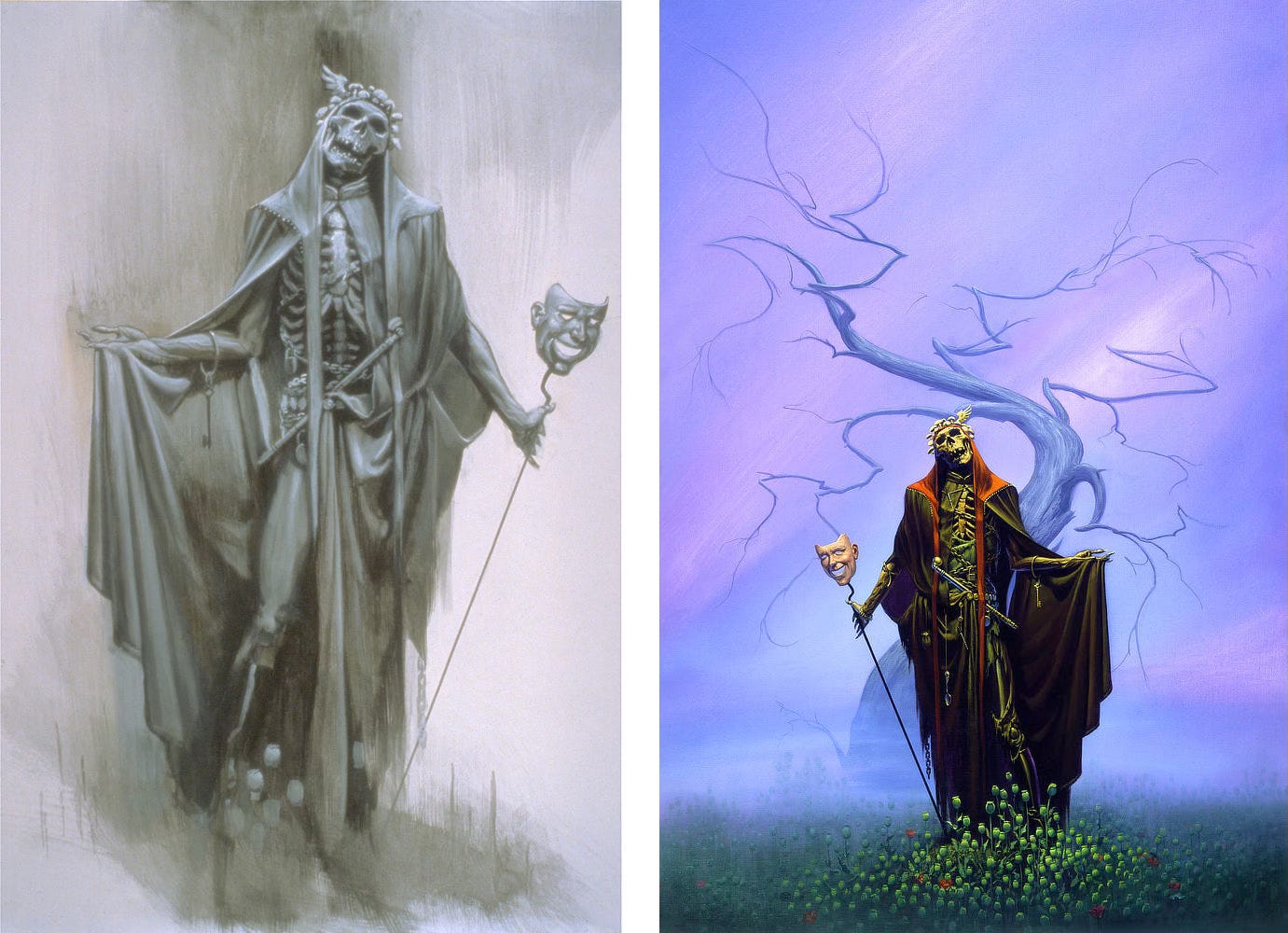
Doing illustration has allowed me to perfect my craft to the point that I can acceptably re-create most of my ideas in a visual form and communicate what I feel my vision needs to say. I probably wouldn’t have been as successful at doing so when I was younger. Aside from that, getting acquainted with the idea of using symbolism was something that developed out of doing illustration.
On the negative side, my background as an illustrator will probably hinder my gaining acceptance in the “fine art” world, where the bias against applied art is such that the mere mention of illustration can be the kiss of death to an artist looking for acceptance.
How do you feel about that?
MRW: It doesn’t matter, really. There’s a strange dichotomy going on here: I care about the personal works communicating to others, but I couldn’t care less if they are “accepted” or not. I mean, from my view, I’m going to paint them anyway.
As long as they’re available to be seen somewhere, whether they are seen or shown in one gallery as opposed to another is secondary. The financial security that illustration provides allows me to do my personal work without having to consider anything but simply doing the paintings as best I can.
Weekly Art Recap


Peace - a fan favorite holiday image evoking the hope for peace in the new year
Winter Enchantment - ice fairies dance as they illuminate a Christmas tree
Woodland Peace - channeling a difficult year into holiday art with quiet grace
Winter’s Glow - a full length “making of” feature for Christmas Day
The Narrow Way - cover for Book 2 of Tales from the Flat Earth by Tanith Lee
Astral Muse - inspired by paint patterns leftover from Words oxf Radiance
Subscribe so you don’t miss a thing…
If you like in-depth content about Michael Whelan’s art including deep dives into his process, please consider subscribing. Our weekly newsletters are free, and we offer additional perks for paid supporters like high resolution digital wallpapers and the free digital edition of Wonderworks!
So interesting. I had the privilege of working with Michael for decades---my dad gave him his first commission. And I can look back at paintings that were done as illustrations which border on Michael's personal visions. Certainly the four OTHERLAND paintings blur the boundary. Especially Mountain of Black Glass doesn't illustrate just one scene, but rather an idea of the philosophy behind the series. And I've always felt that The Year's Best Horror paintings were works done to please Michael himself--especially my favorite: the one featured: "Avenging Angel". It's the horror of our generation--the first drug-using generation. Though people (especially in the creative fields of music etc used drugs many generations before) our generation was the first where drug use was more universal.